After a bad first impression, giving Leon a chance

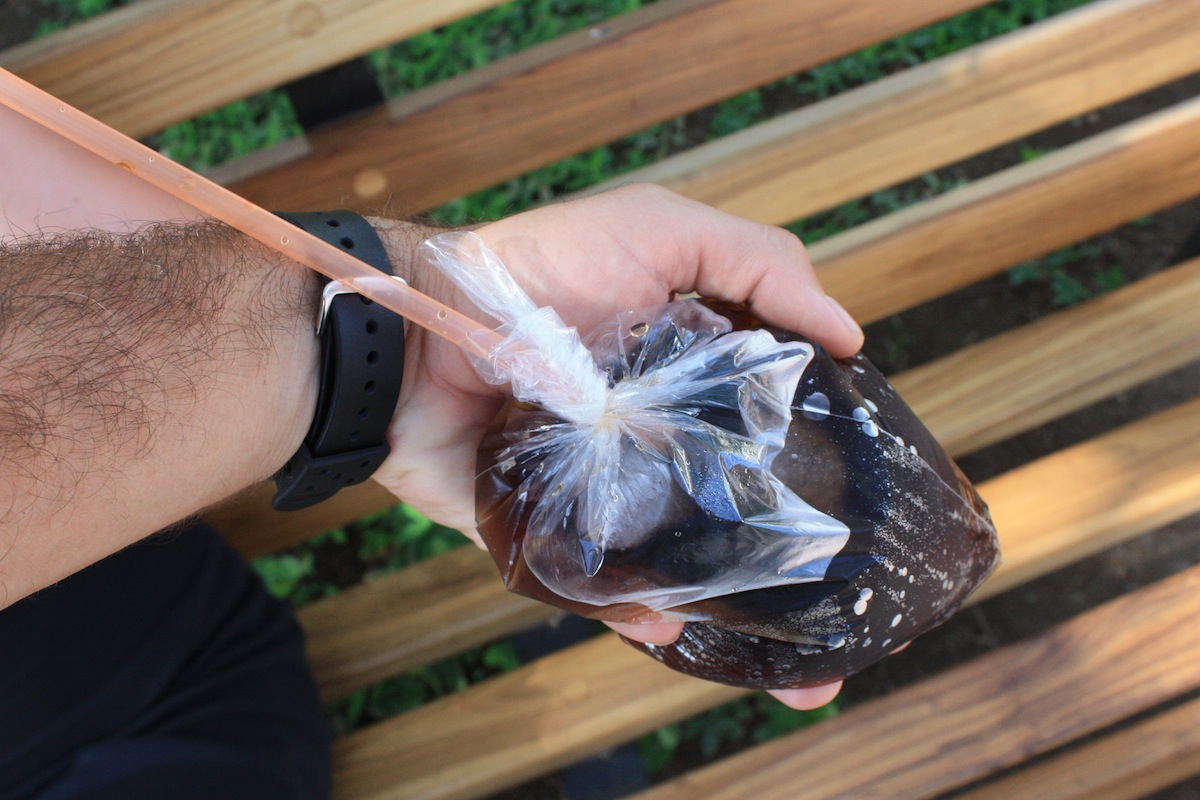
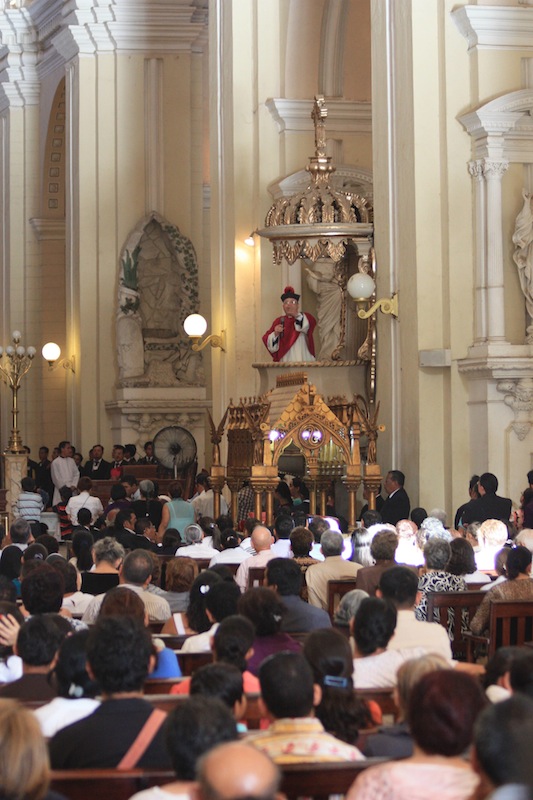
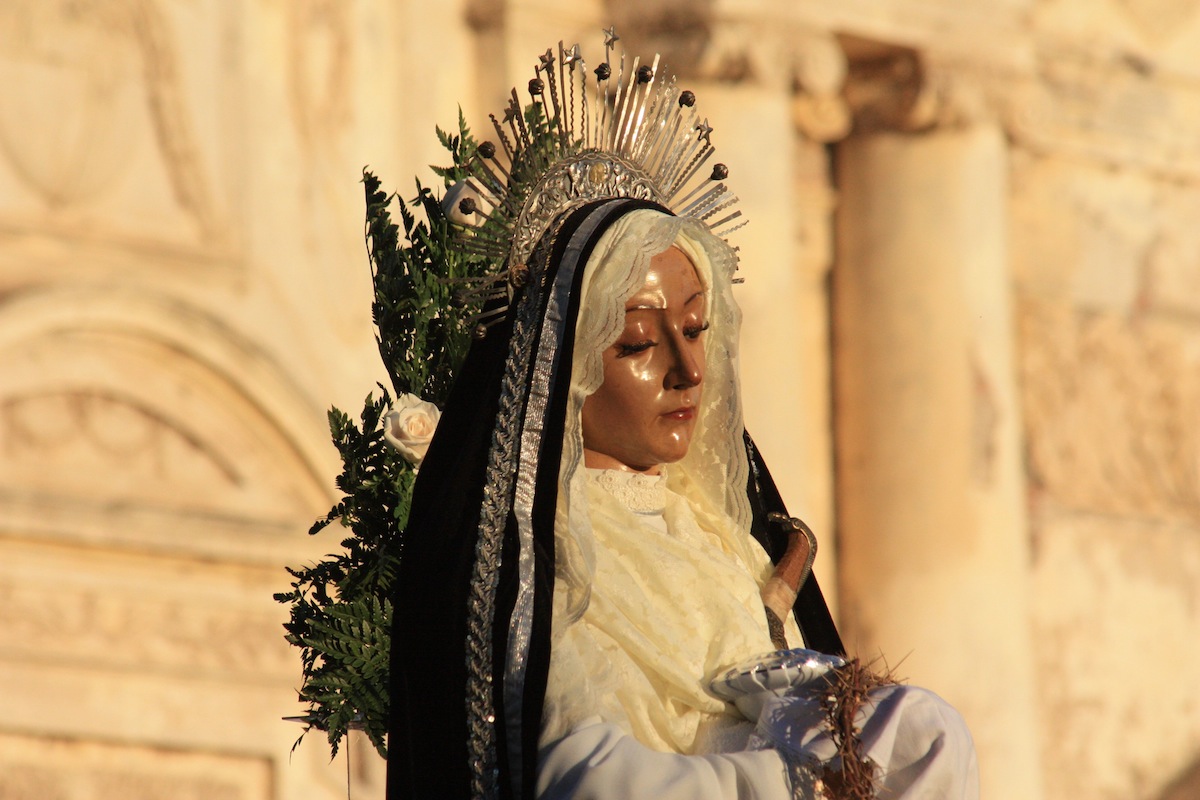
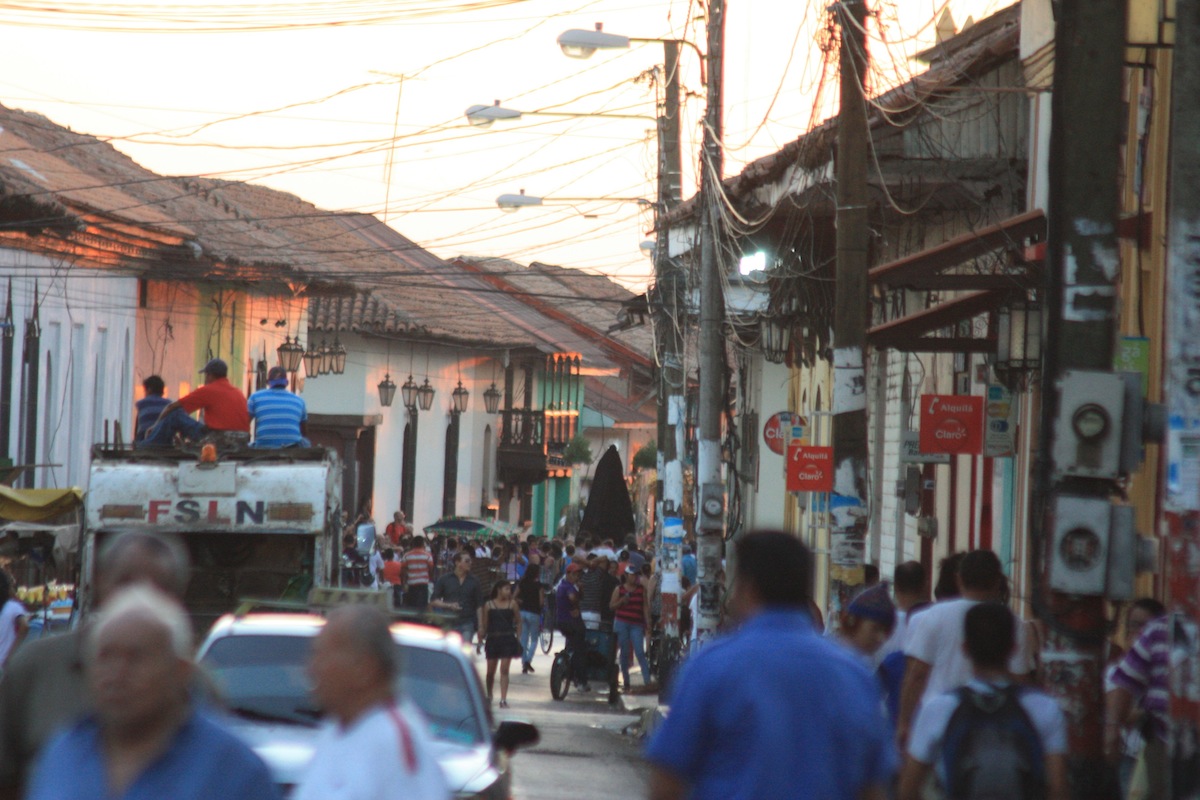
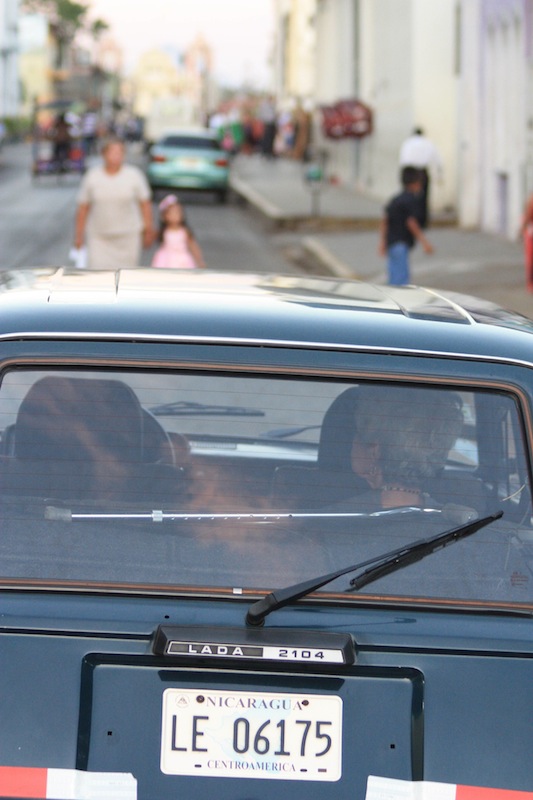
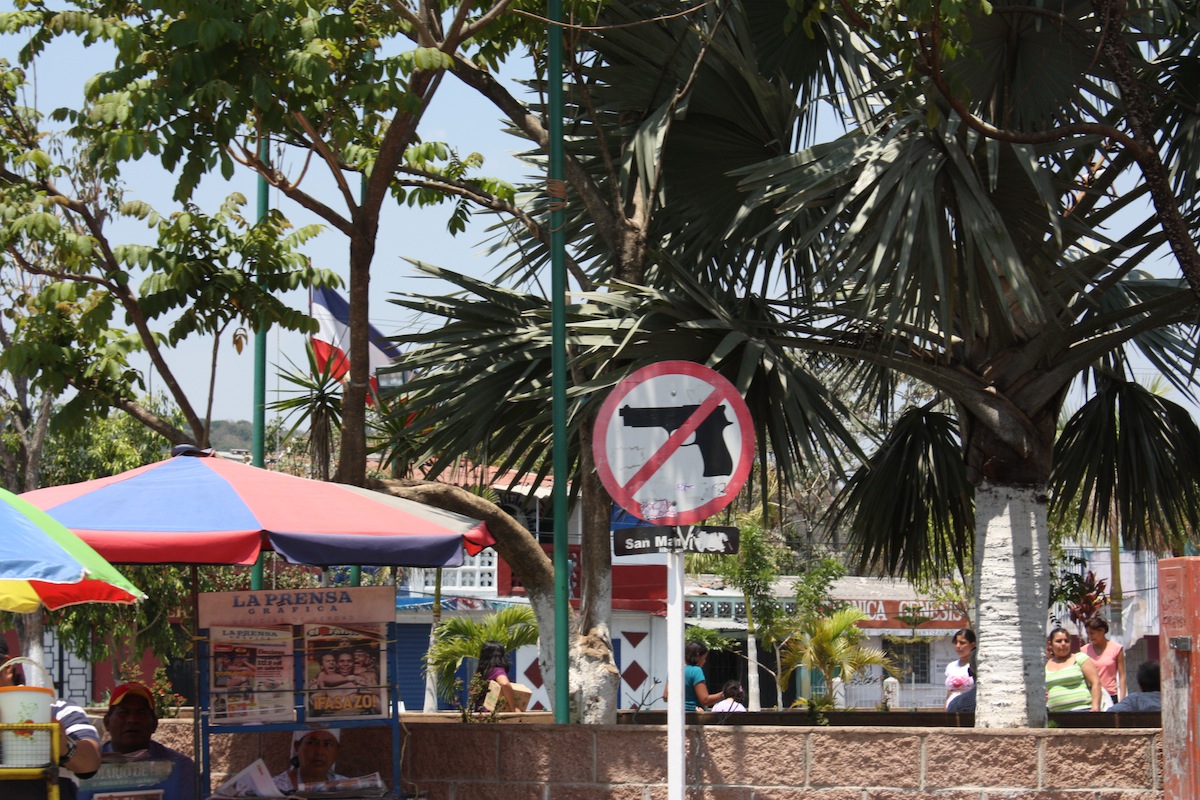
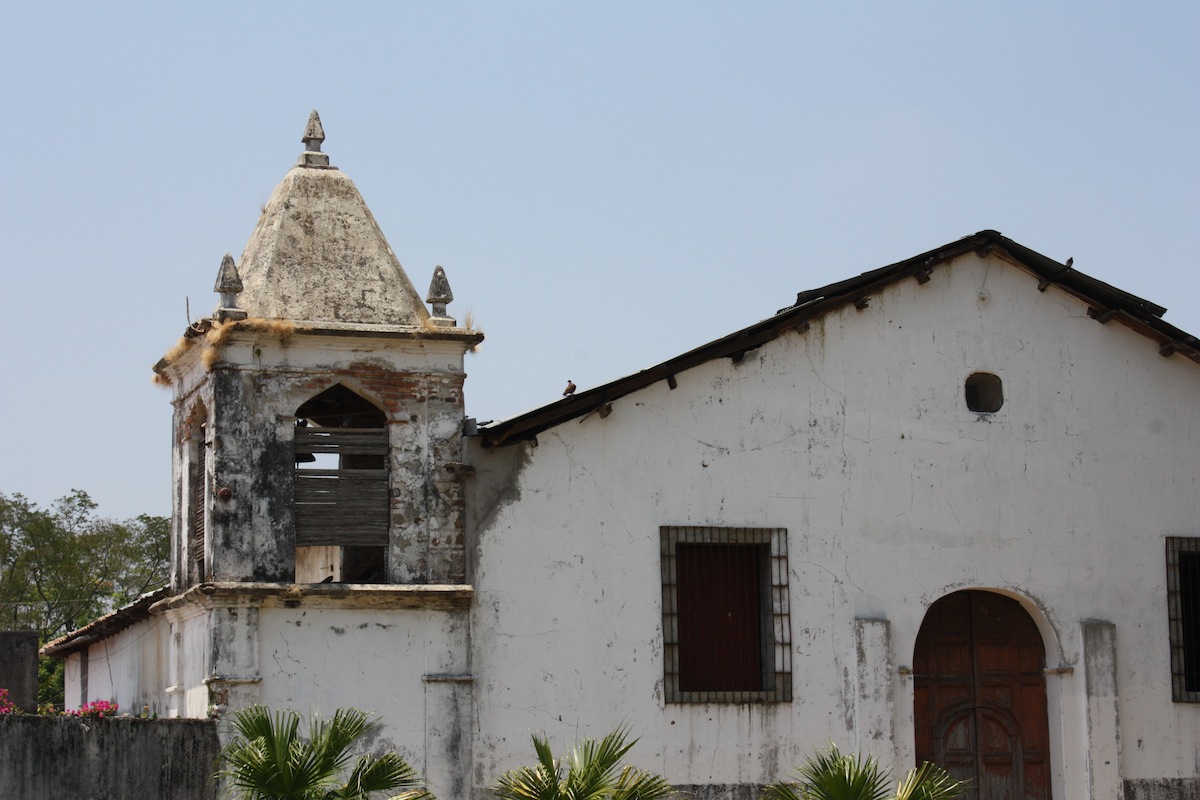
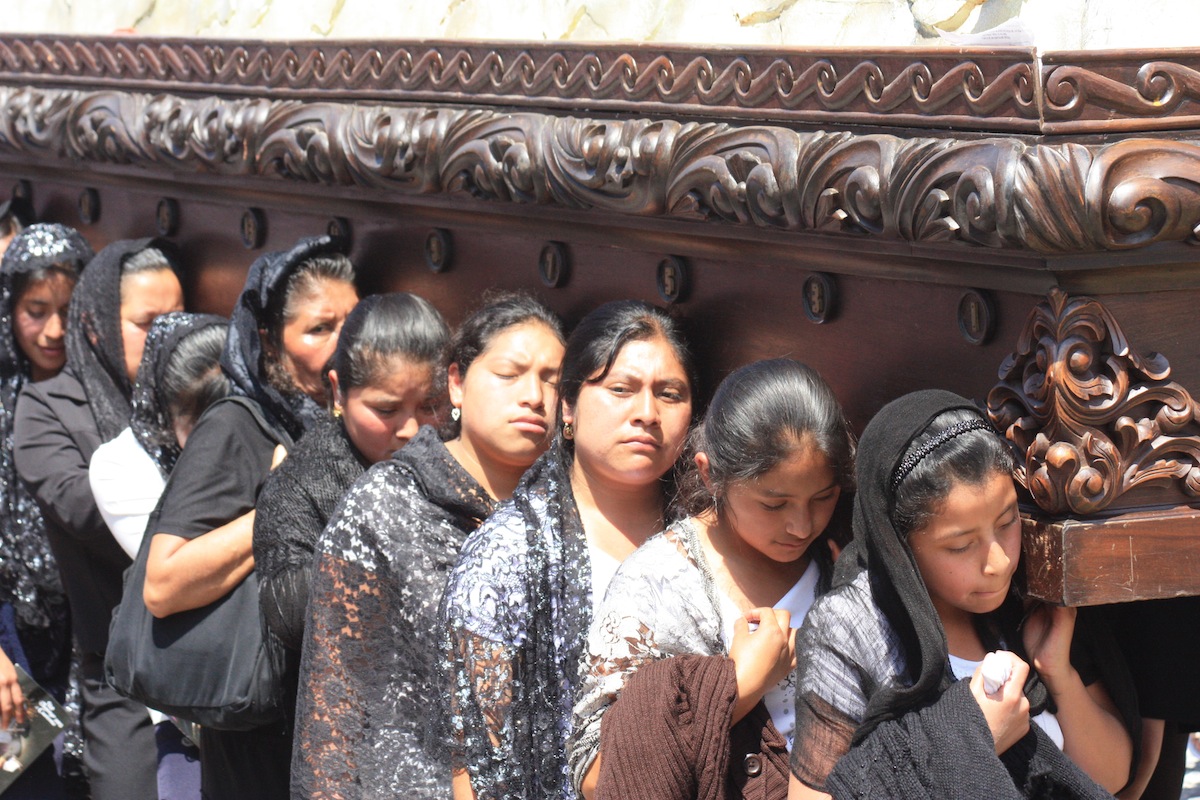
Well, I can’t say the city exactly welcomed us with open arms.  After a rocky couple of nights, we wanted to give the city a chance.  It was a little frustrating how many local businesses were closed because of Semana Santa, but there was nothing to be done about that.  We spent some time relaxing on a shaded bench in the central square.  George likes his coca cola, so he went to grab one from a local street vendor.  What he came back with was a plastic bag filled with ice and cola, tied off with a straw jammed in.  Not the cold refreshing glass bottle he was expecting.  The city does have its charms though.  A beautiful church in the central square (the largest in Central America) was the starting point for an Easter procession (minus the alfombras that Antigua laid out).  G and I had a front row seat from a coffee shop.  Another charm – delicious coffee.  All-in-all, Leon was a nice town – I can’t see myself visiting again though.  I don’t have the will do fend off the bed bugs.

Last stop El Salvador (El Cuco)

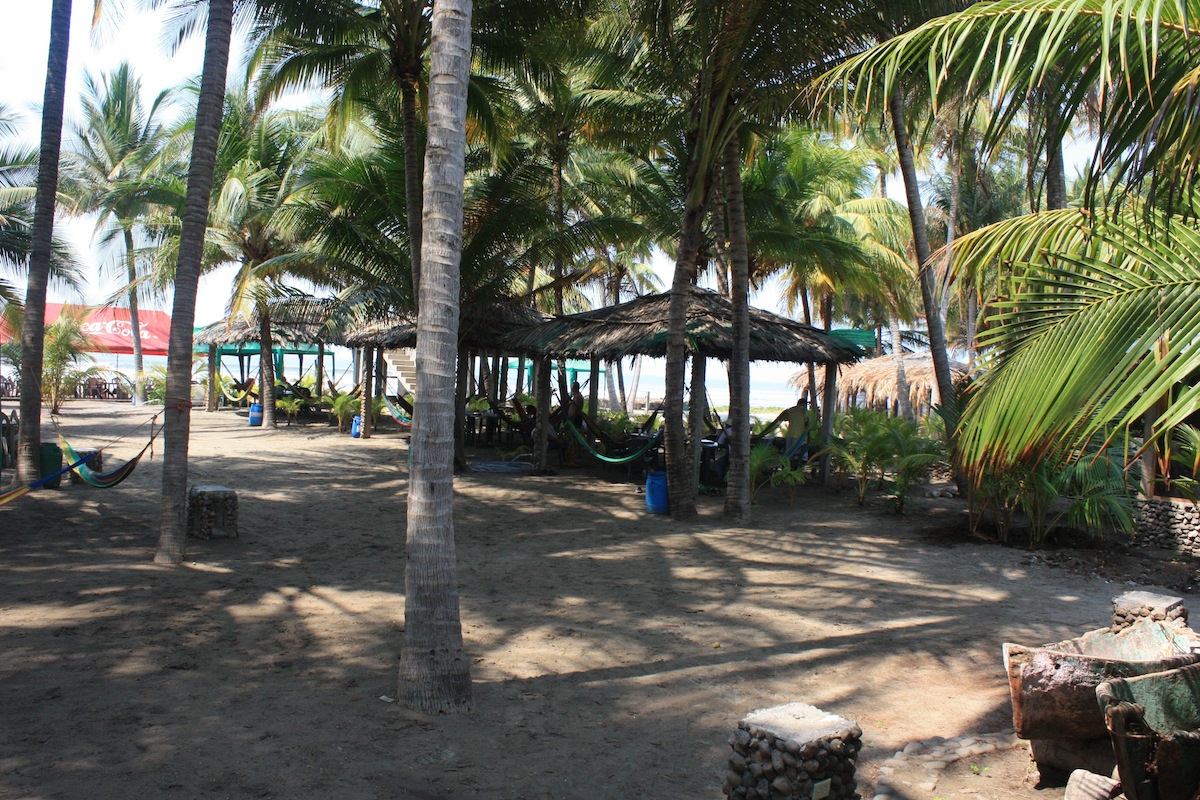
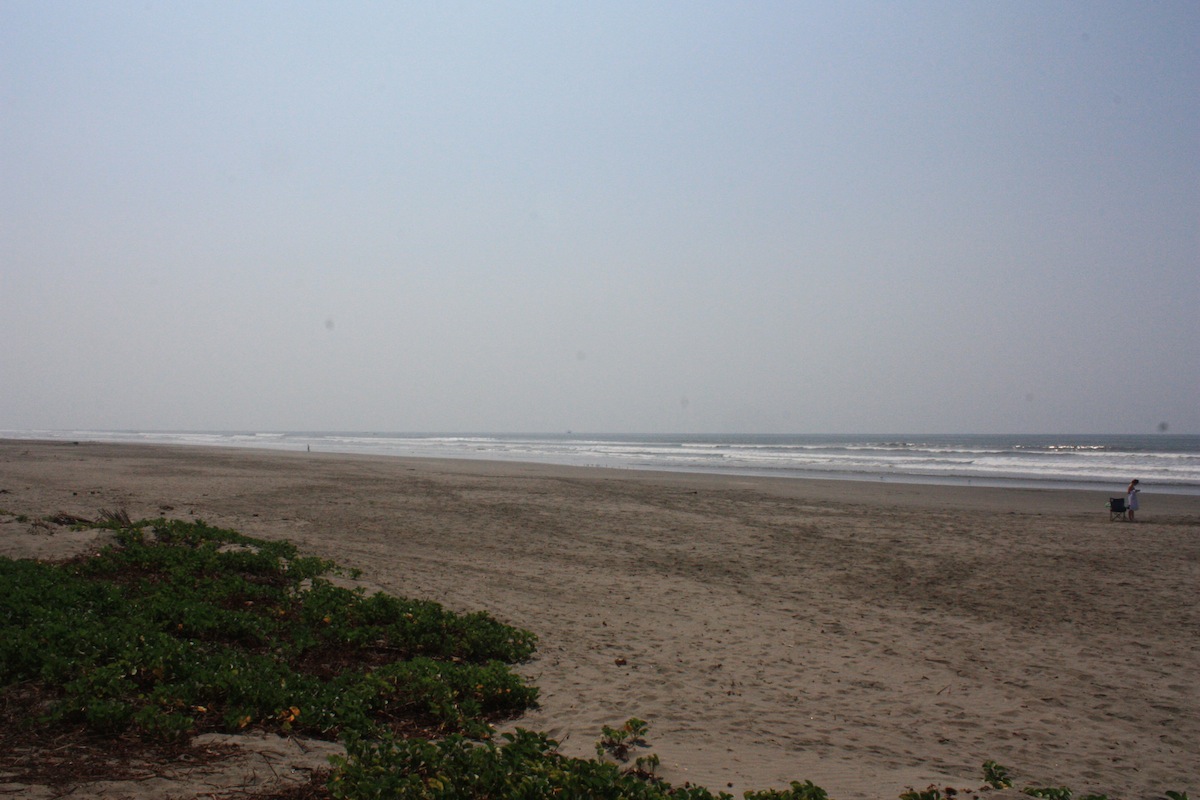
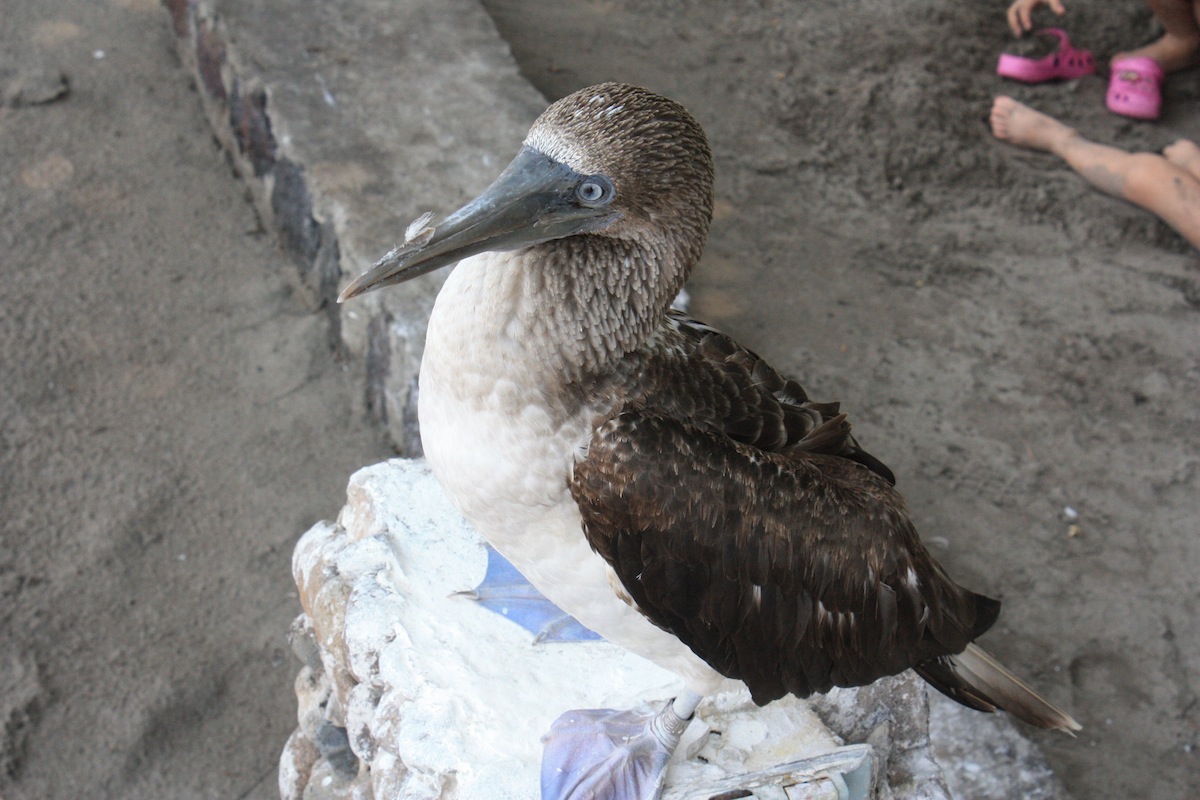
Our final stop in El Salvador was (conveniently close to the border with Honduras).  We stayed at La Tortuga Verde which I would describe as designer camping – cabins with an open air feel (we slept in Taj of course).  The hotel is known for their turtle hatchery.  Unfortunately in El Salvador, the locals collect turtle eggs from the beach and eat them.  There doesn’t seem to be any organized government effort to prevent this, so the hotel owner purchases the eggs from locals for $0.25 a pop, so they can hatch.  He buys thousands of eggs a year.  The beach was lovely and there were apparently great surfing spots near buy.  I did read to be on the look out for jelly fish though, which can really throw a wrench into your wave frolicking.  We were only planning to stay for a night, but hung around for several days enjoying the hammocks.


Leaving our home away from home and into El Salvador

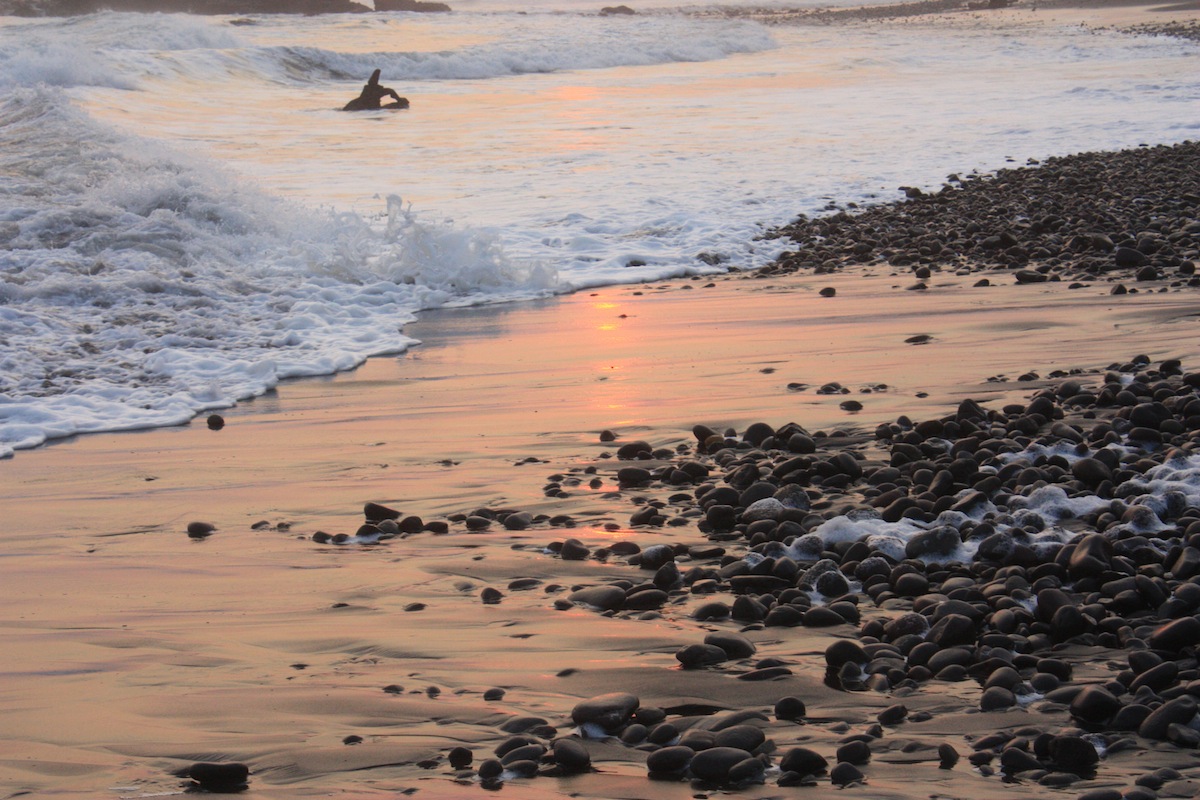
I had mixed feelings about packing up and leaving our little apartment in Antigua, Guatemala and heading to El Salvador. I was ready for a new adventure after conquering 3 weeks of Spanish, but sad to be leaving a town that I fell in love with. Our first stop was Playa El Tunco on the Pacific. El Tunco is a little commercialized black sand surf community with lots of overpriced food and lodging options. The waves were massive, but for those of us who are not surf inclined and prefer to frolic in the waves, I wouldn’t recommend it. The beach is covered with smooth black rocks, which are pushed up and down the beach with incoming and outgoing waves. You can imagine how hazardous this can be on your ankles when you’re standing in the shallow water. G and I did have good fun getting a little carried away playing in the black sand though.

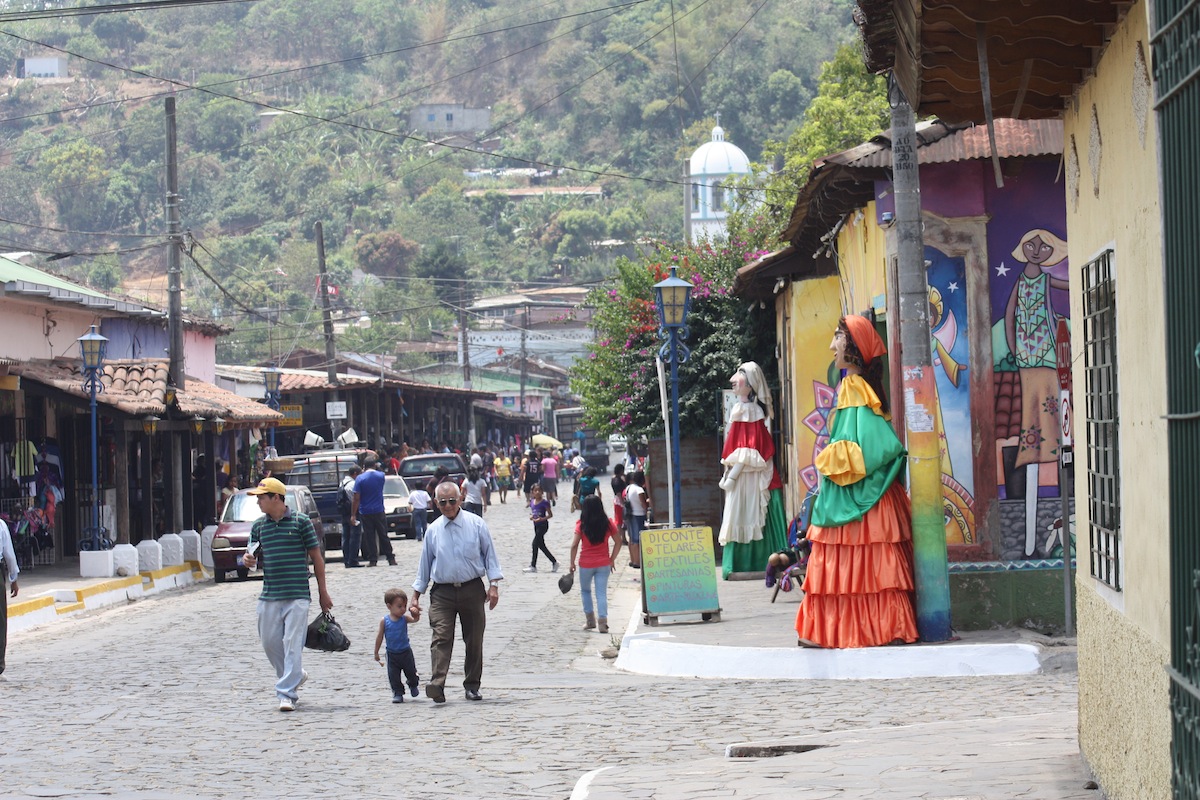
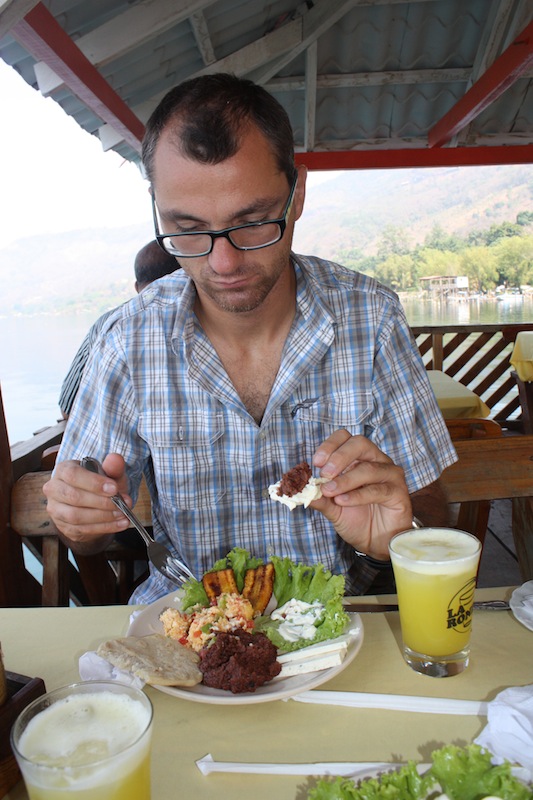
Up next were some colonial towns off the coast, Concepcion de Ataco, Juayua and Suchitoto. Ataco and Juaya are part of the Salvadorian Ruta de Las Flores known for gastronomic festivals every weekend. On the road there, we were introduced to a new method of livestock transport (see photo below). Once there, although G didn’t try the more adventurous dishes like barbecued iguana or frog skewers, we did have stacks of pupusas filled with cheese, beans, meat and hot peppers. We did hear that iguana tastes like chicken, who knew.

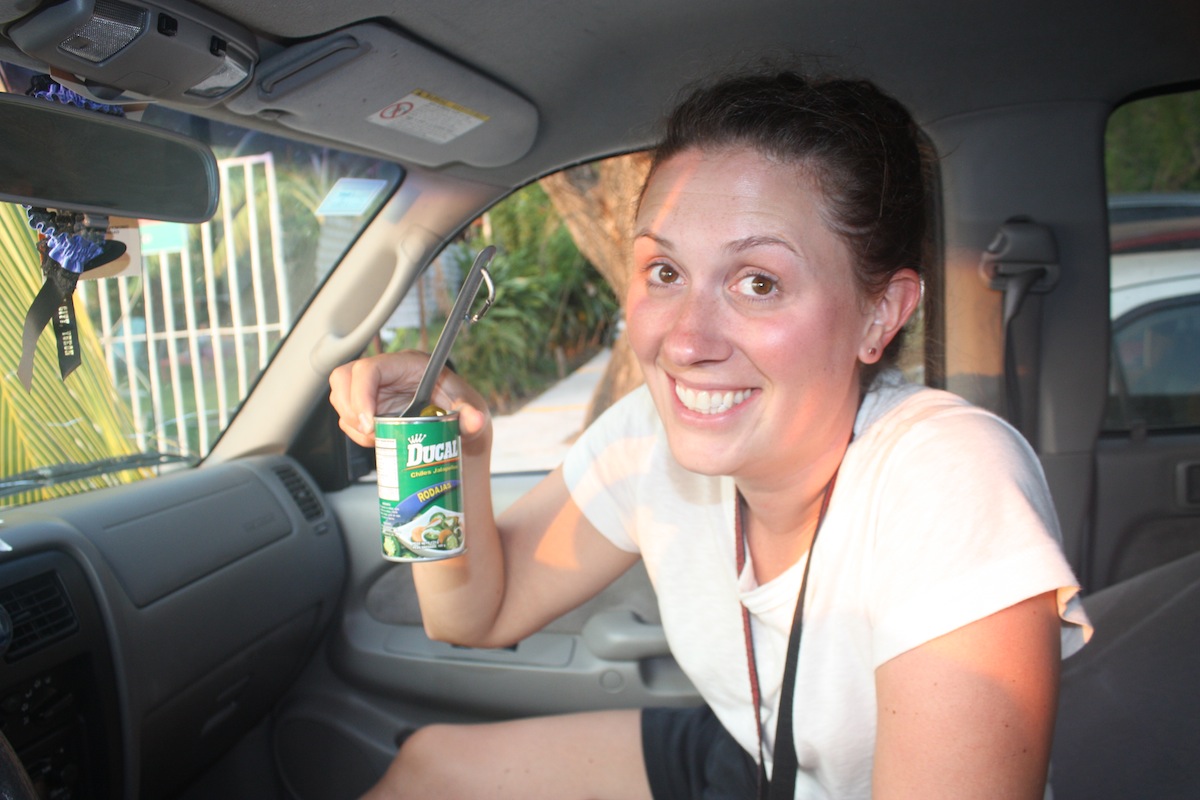
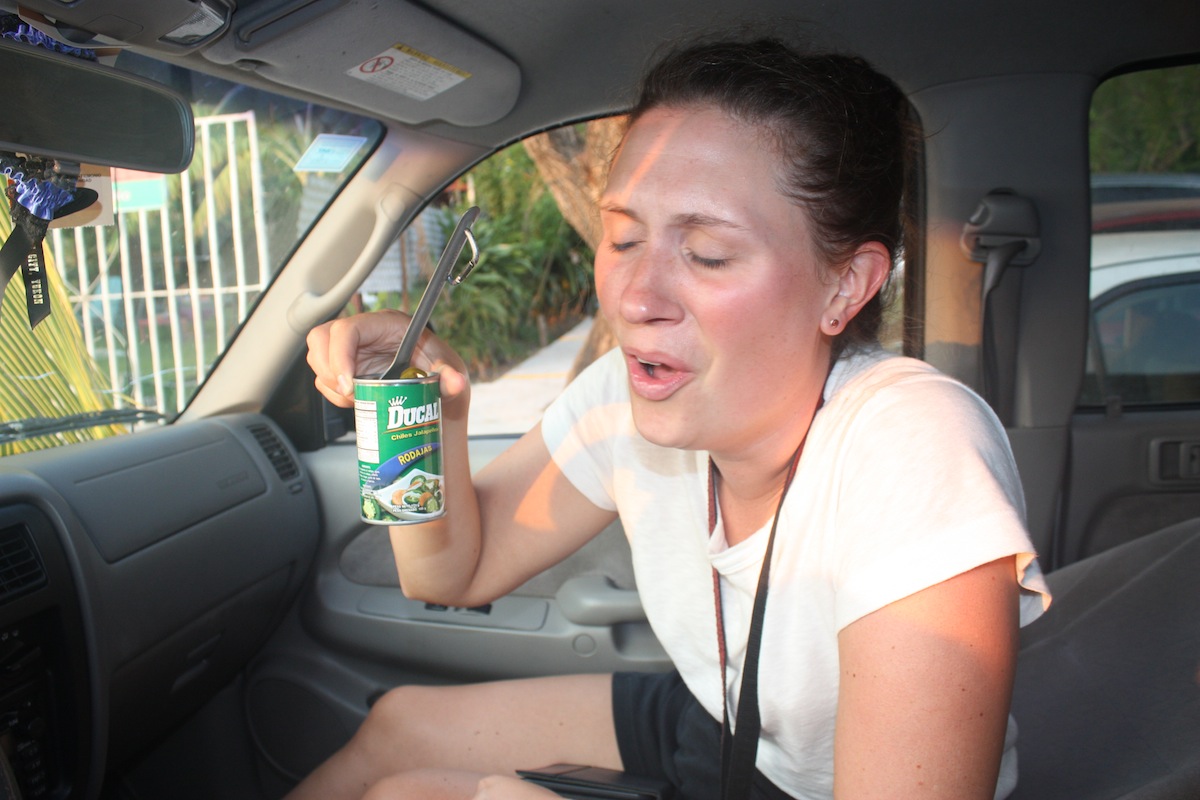
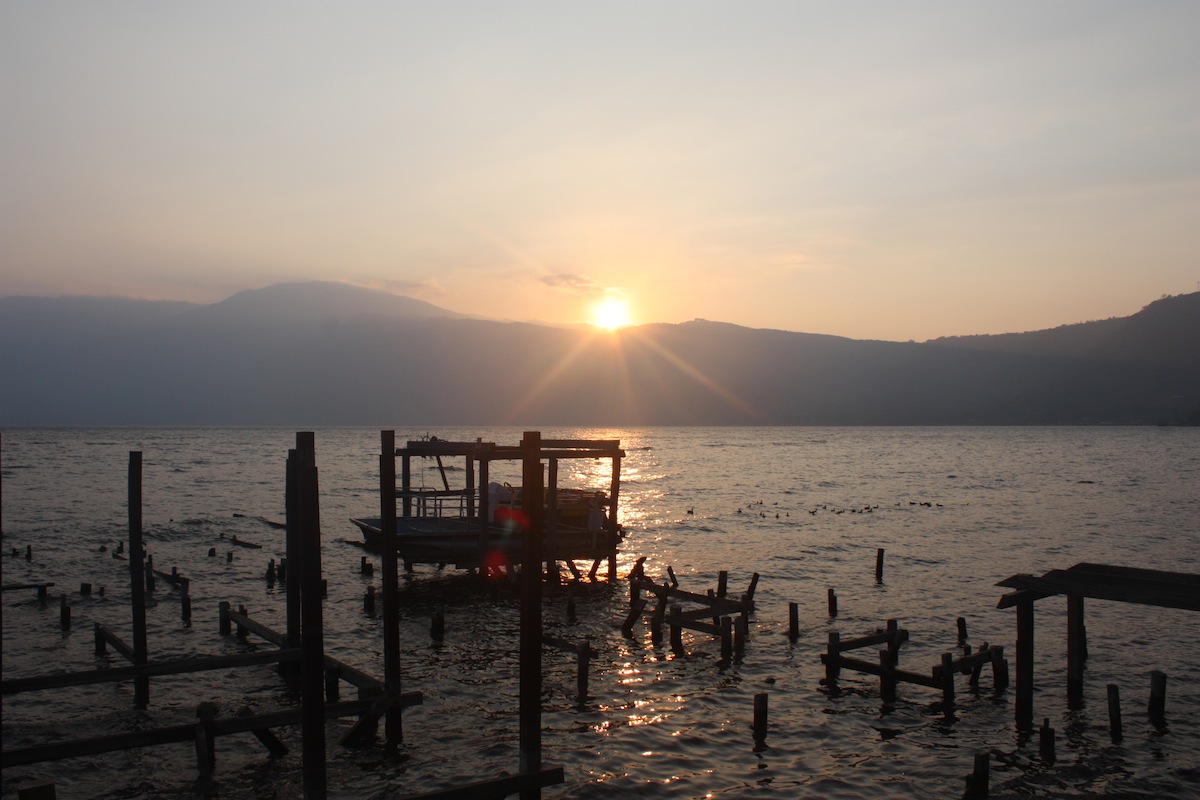
On the way to Suchitoto, we slept in the parking lot of a large restaurant on Lago de Coatepeque. The place was bursting with locals enjoying the lake. I had picked up a can of fermented vegetables to snack on. I’m a fan of the Bulgarian version called turshiya (vegetables preserved in vinegar – very tasty). The Salvadorian version however was ridiculous hot. Needless to say, the can got tossed out. While having breakfast on Sunday morning before taking off for the next stop, there was a baptism in the lake next to the restaurant. Wonderful to see how the lake is incorporated into all aspects of life. Suchitoto was another pretty little town. It was a tad quiet for us, but we did roll in during mid day heat.

 

Alfombras (sawdust carpets)

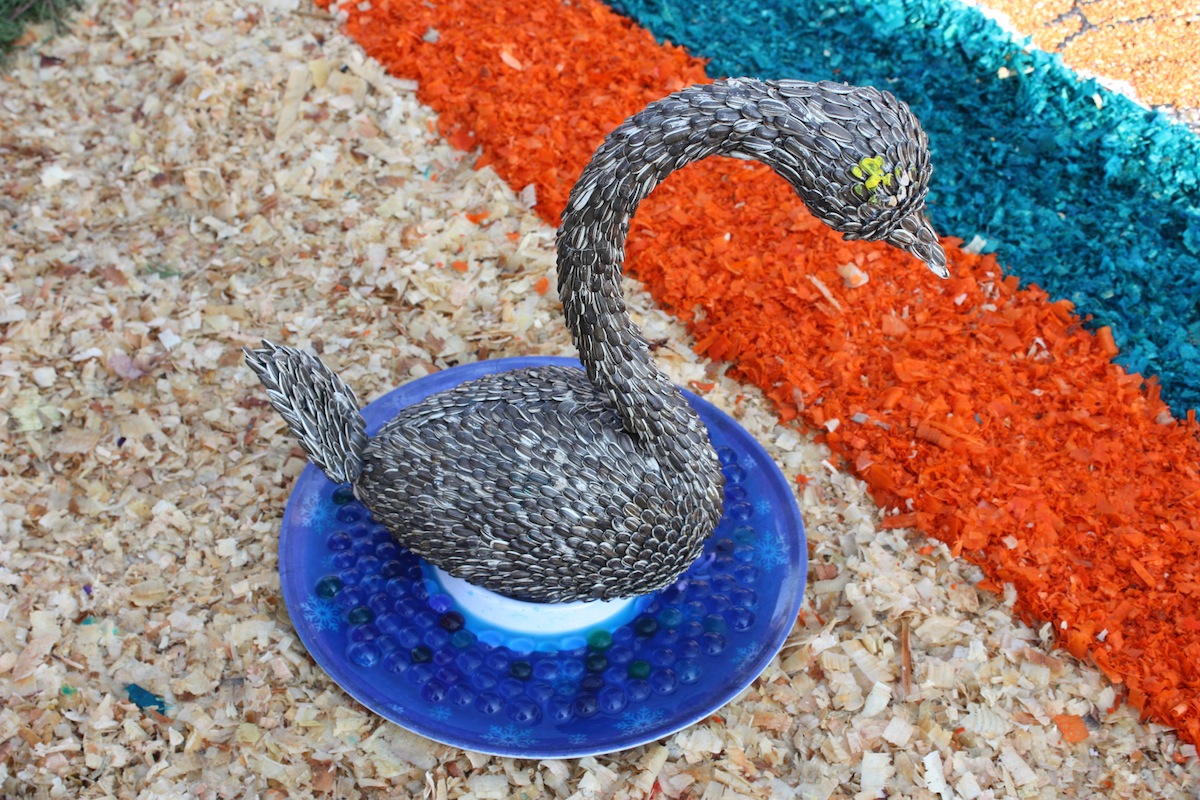
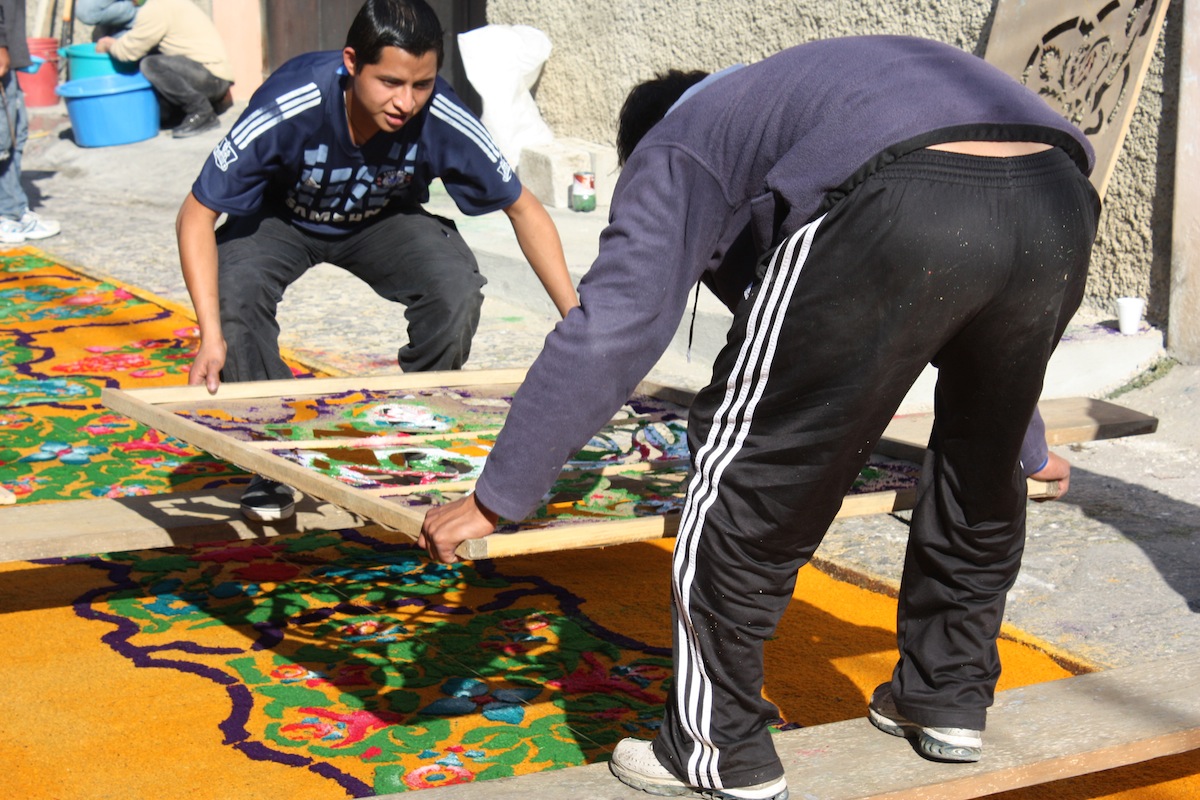
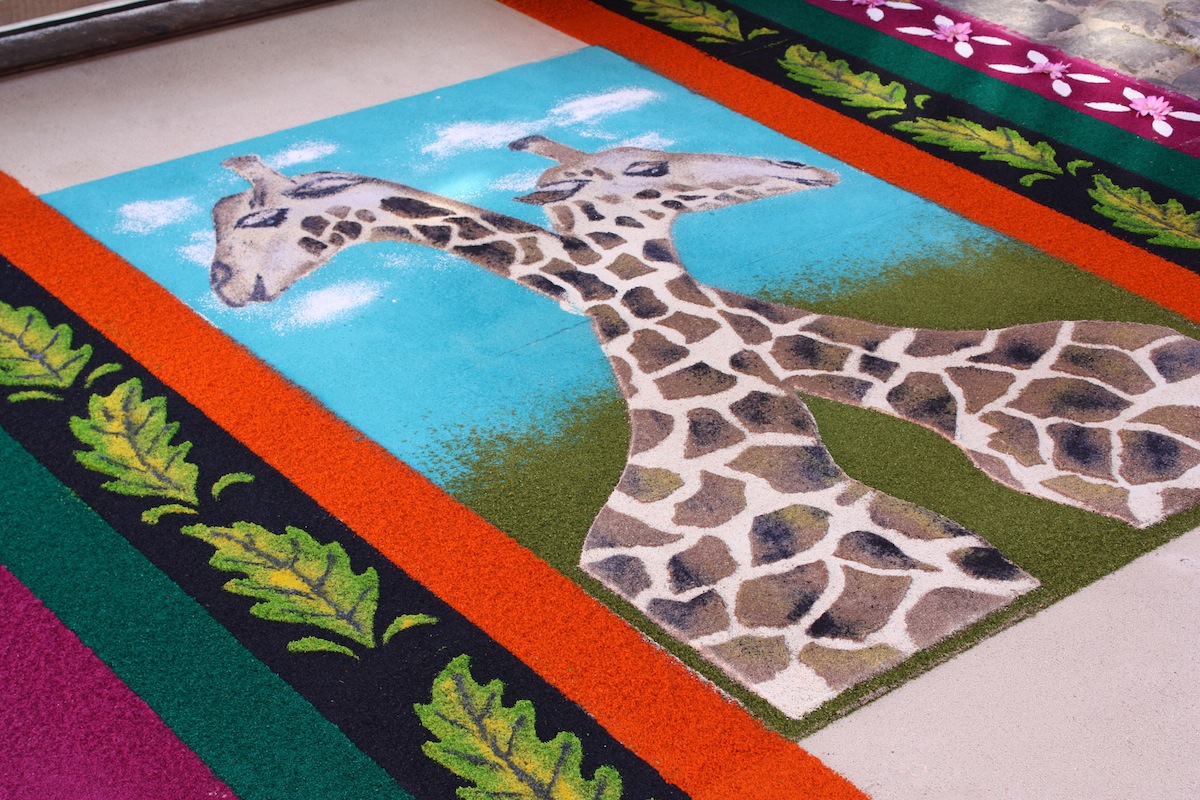
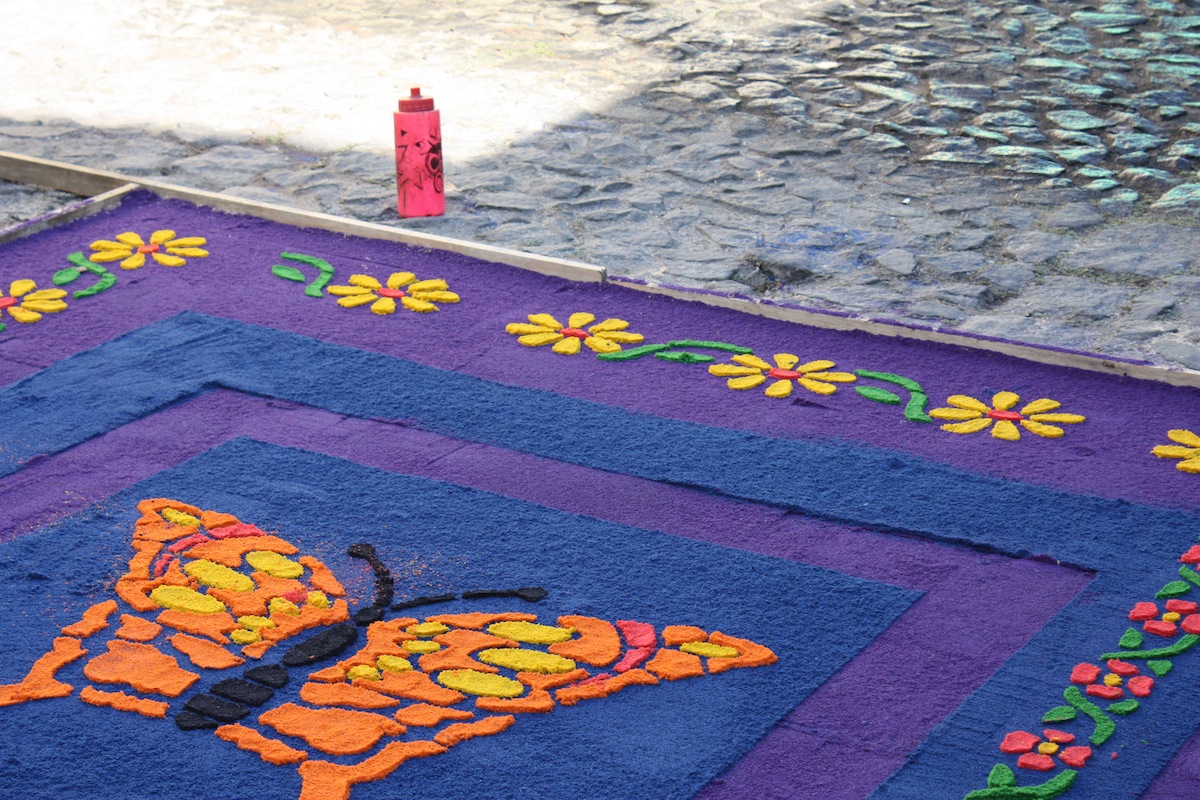
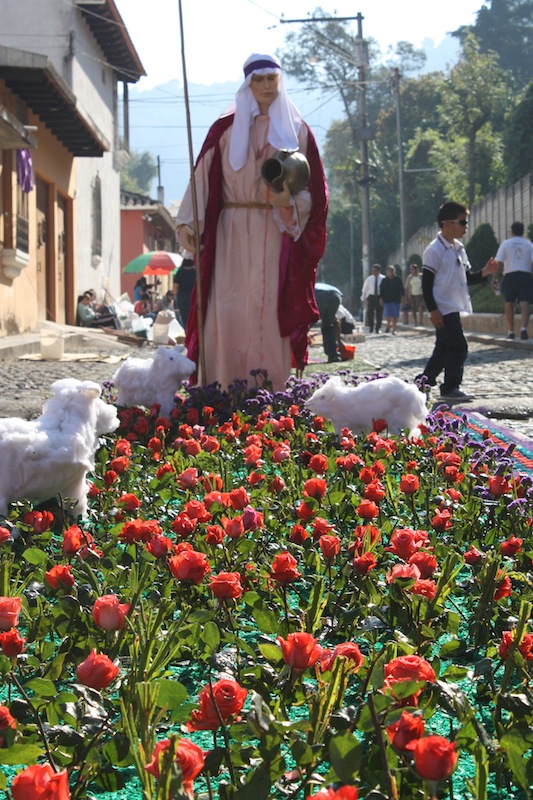
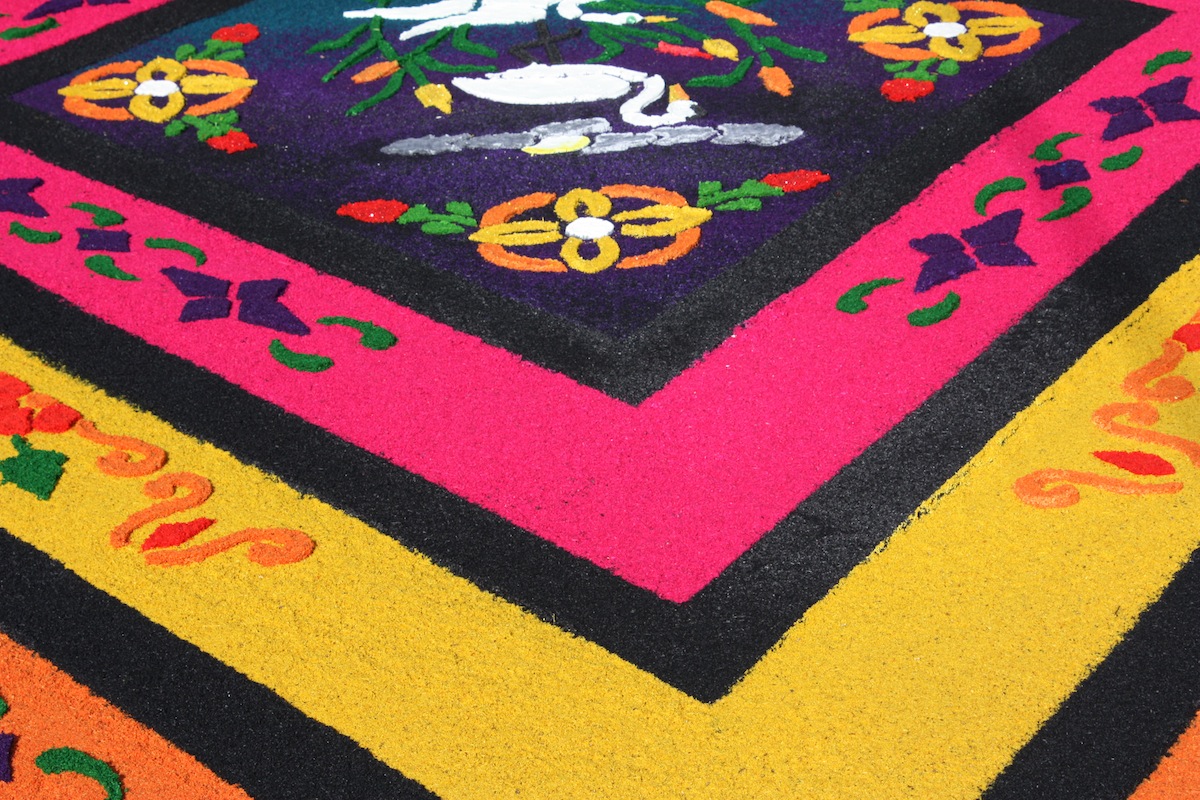
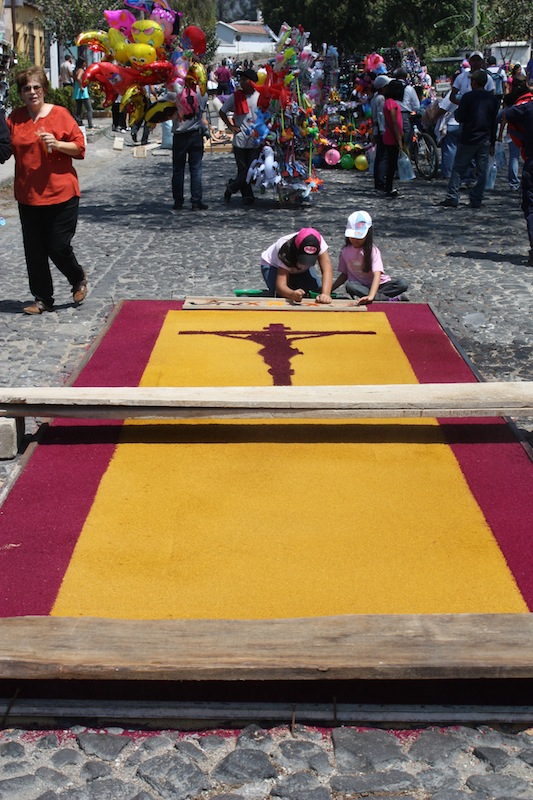
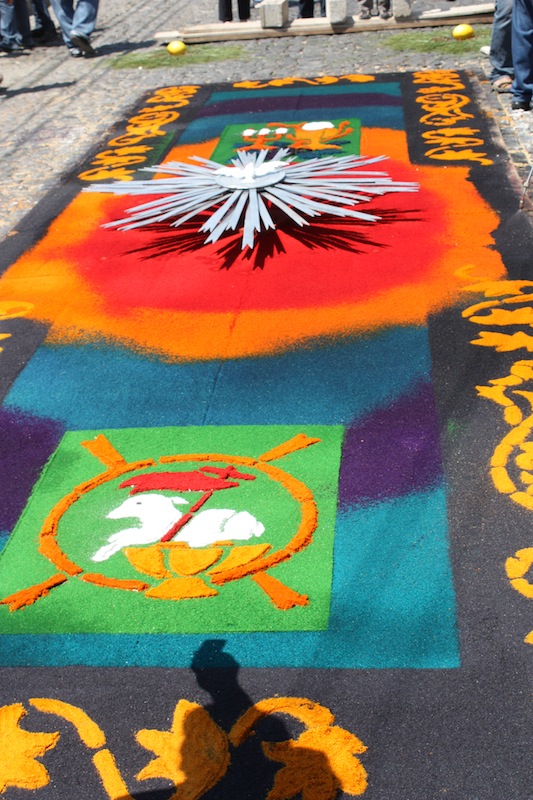
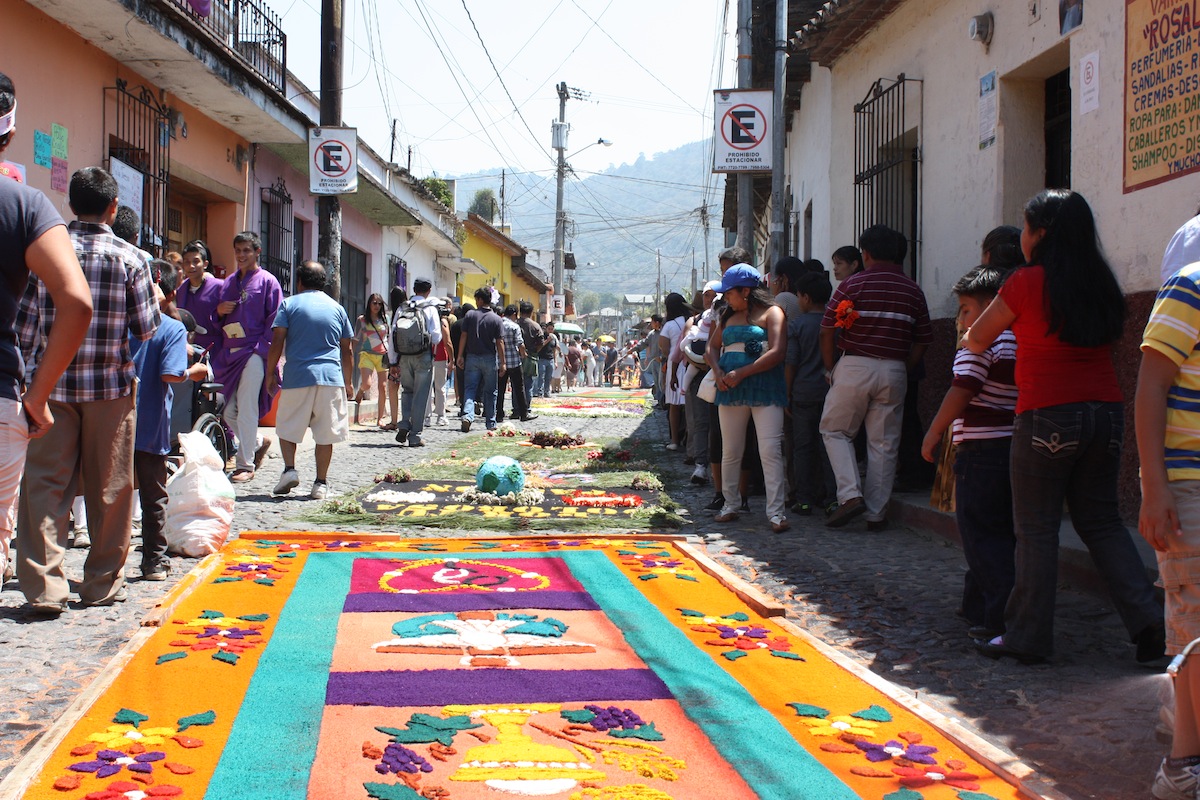
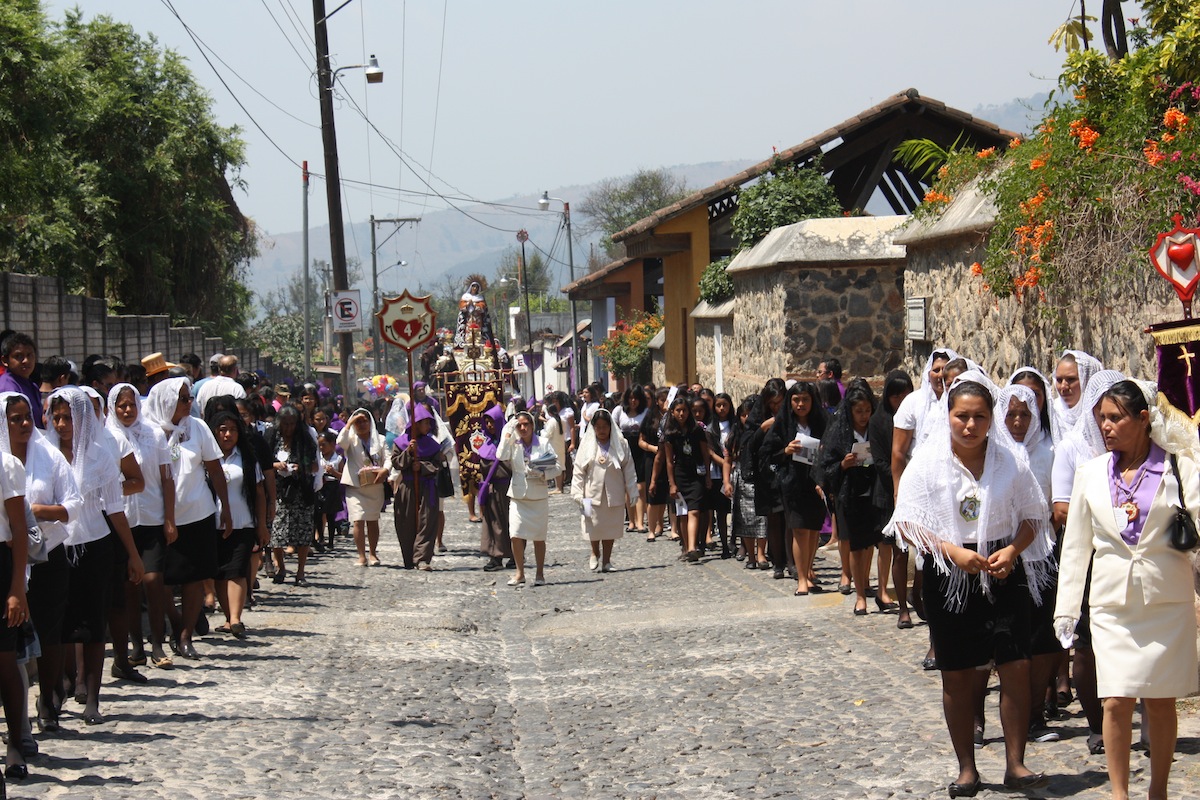
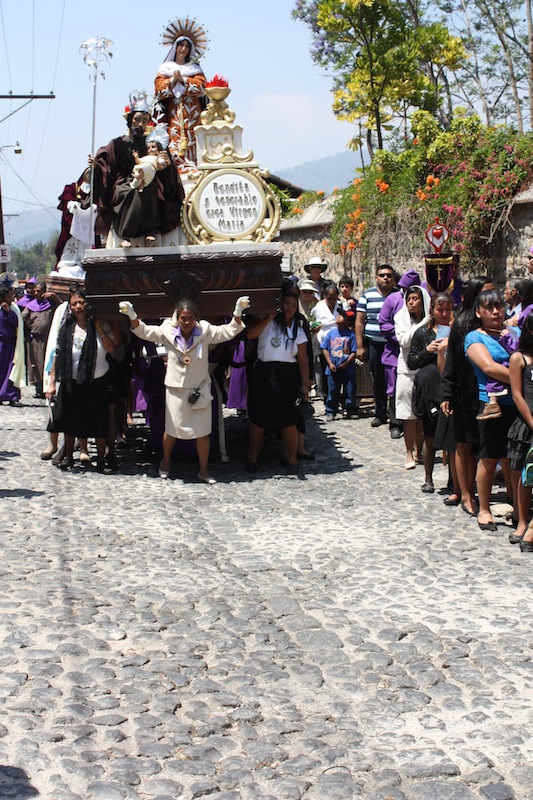
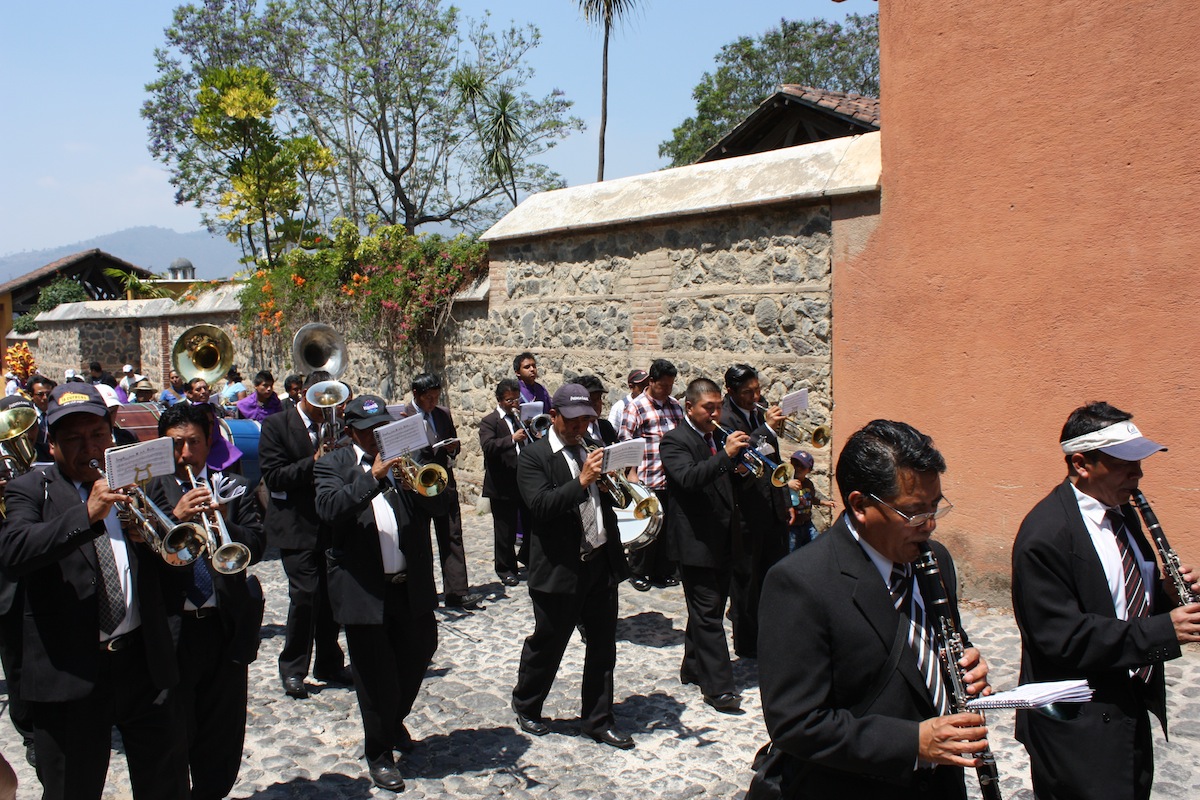
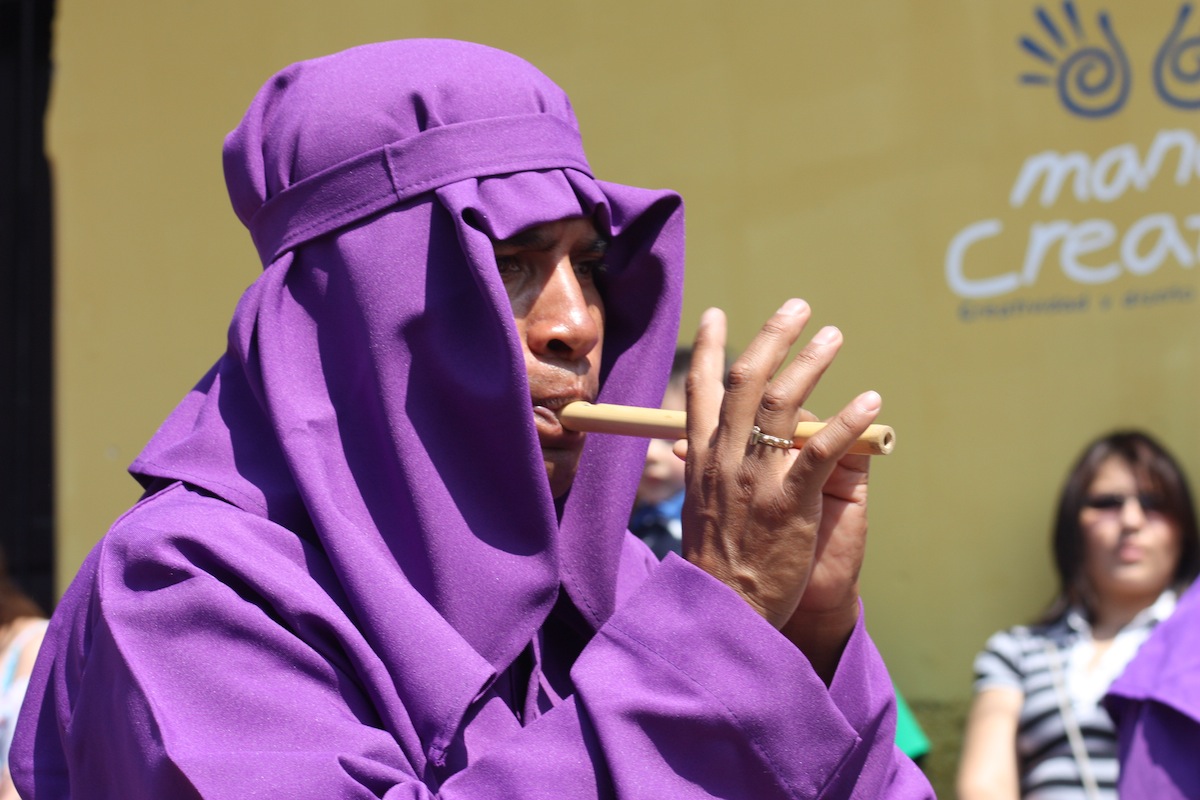
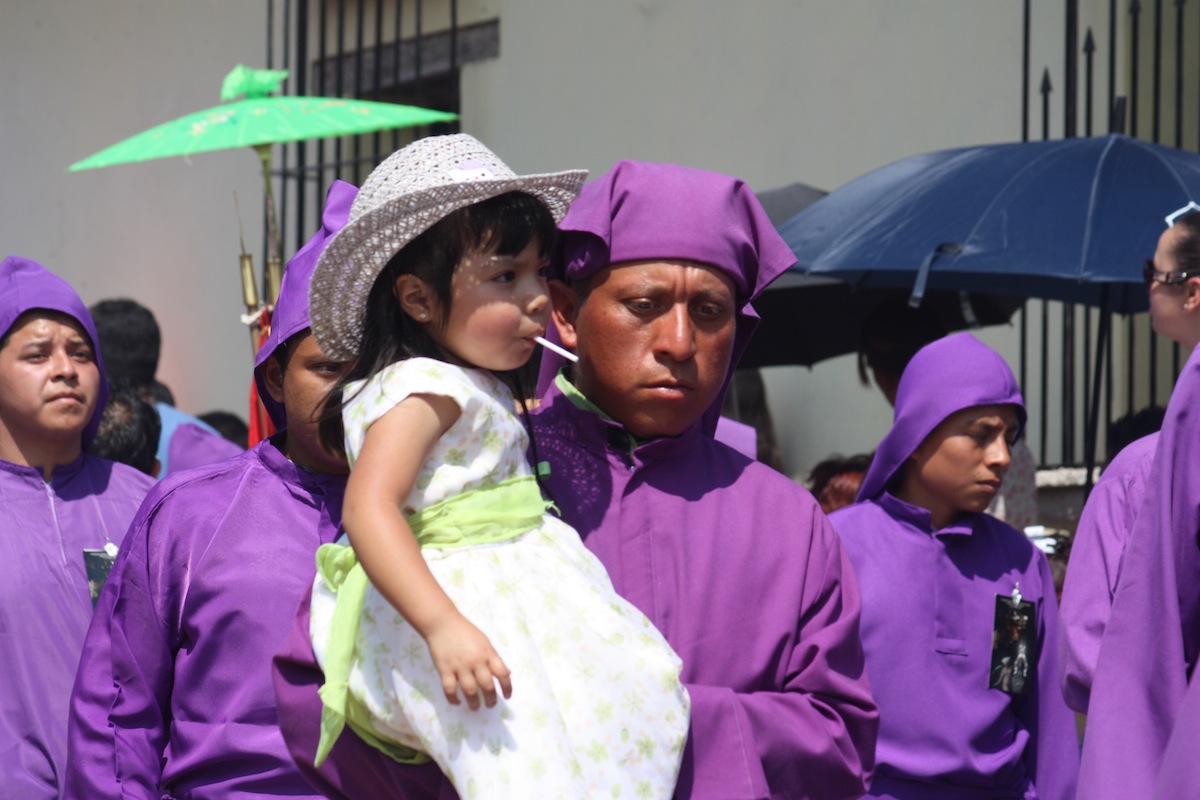
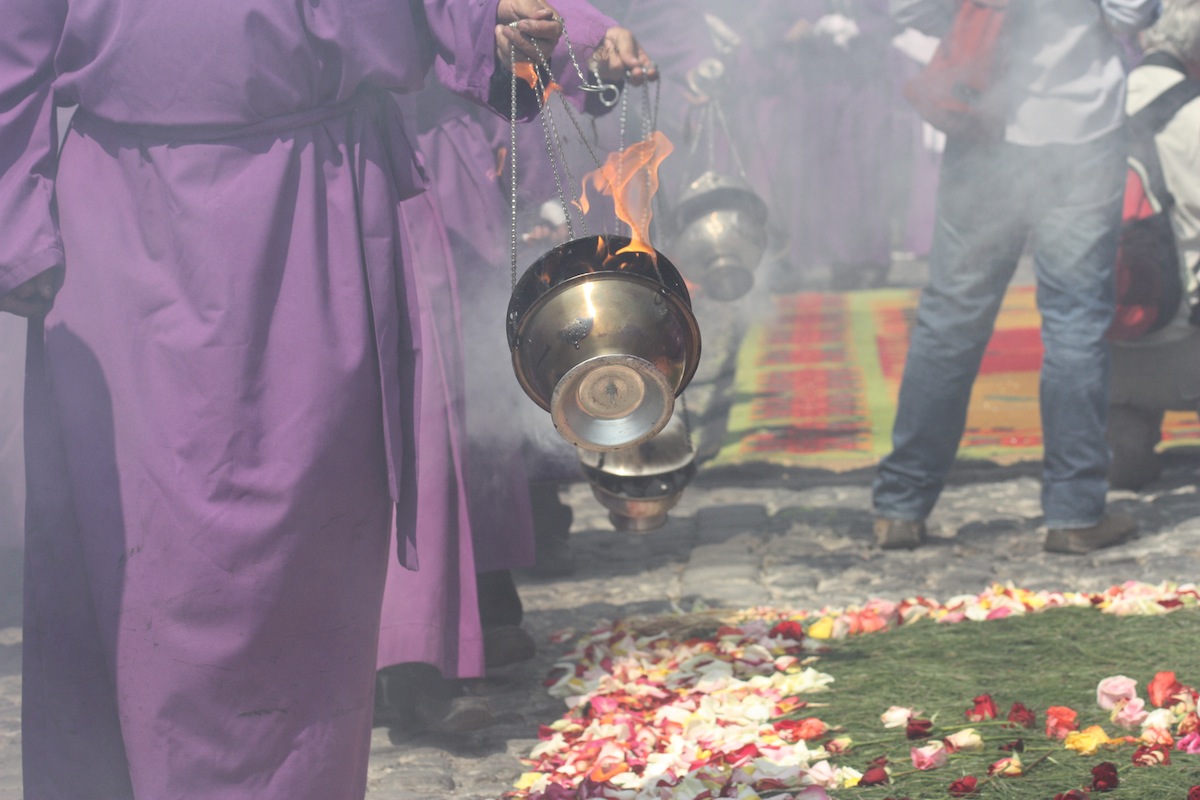
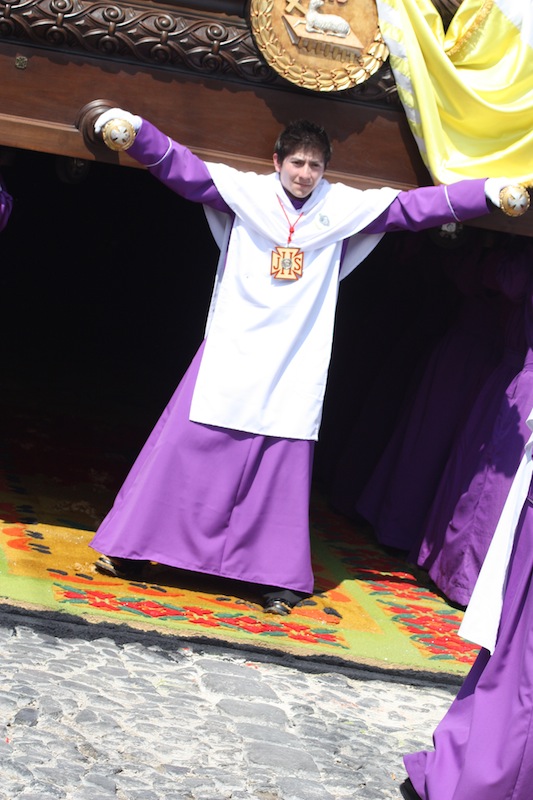
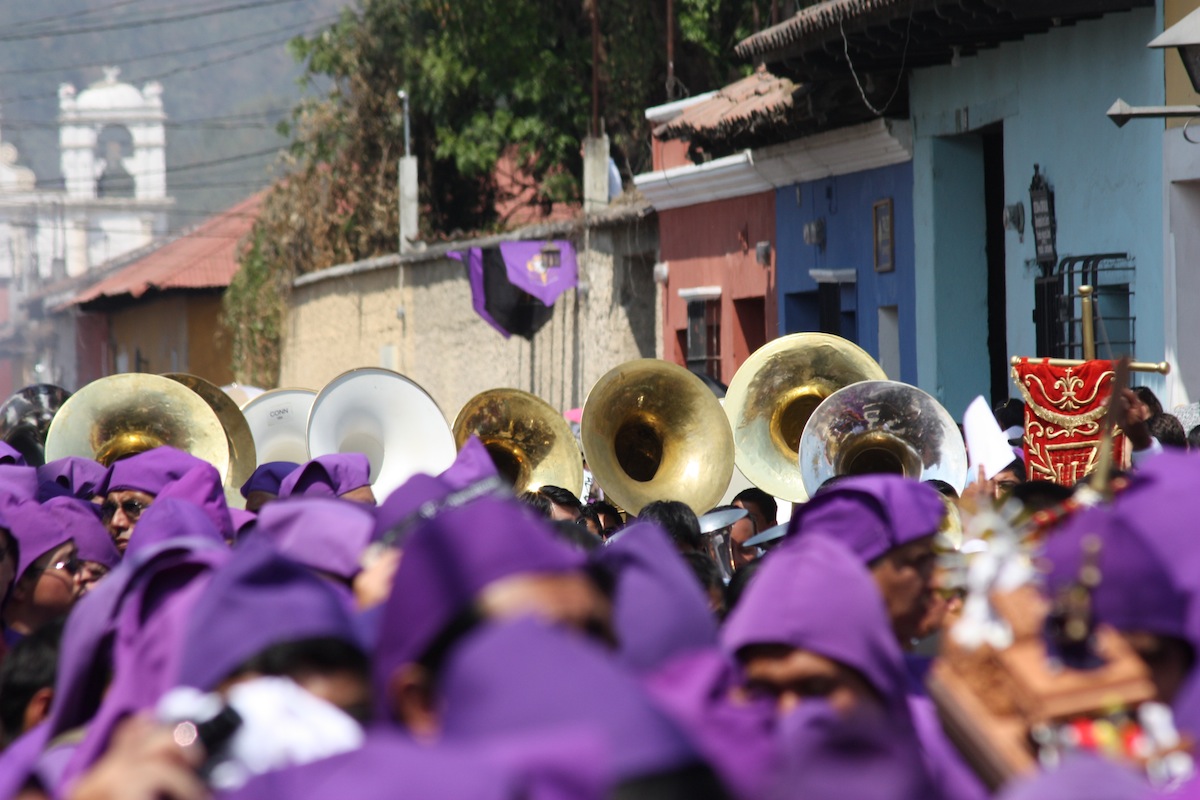
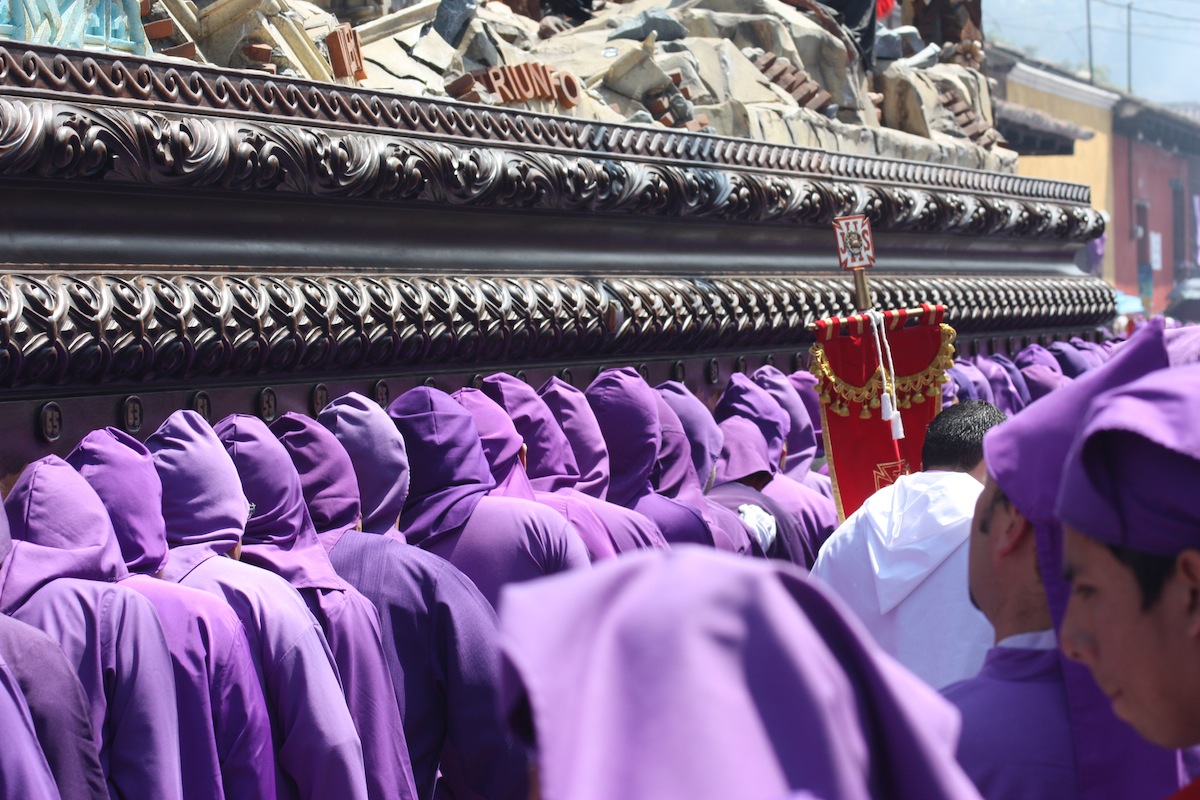
This tradition appeals to me on so many levels.  Entire communities come together to prepare intricate and colorful alfombras (sawdust carpets) in the streets for the Catholic Easter processions.  Teams of friends and family work all day and night to complete the alfombra only to have them walked on soon after by the long processions and immediately  shoveled up by the clean up crew.  Each group seems to have their own method and design concept.  They are primarily using coloured sawdust, wood shavings, pine needles, flowers and other random at hand things like vegetables and bottle caps.  One alfombra even had a fountain with wine while another was a rendering of jesus entirely done out of different shades of sawdust.   Because we were visiting Antigua in the weeks leading up to Semana Santa, there was a procession every weekend.  I would compare the processions to a parade in North America.  Needless to say, there was eye candy every weekend.  The processions include hundreds of men (dressed in purple) and women (dressed in black and white) carrying religious icons.  One of the platforms being carried was so large that it required 70 people on each side to carry it.  Processions start in the morning and can go all night.
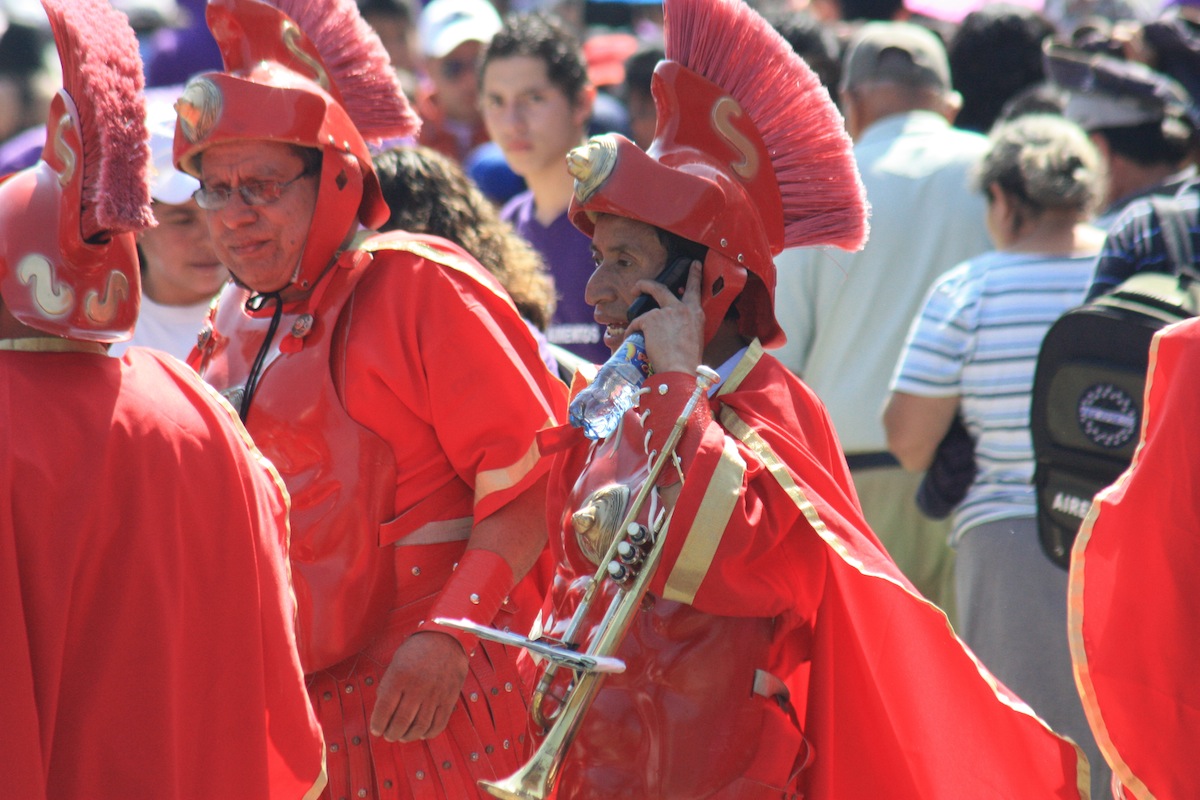
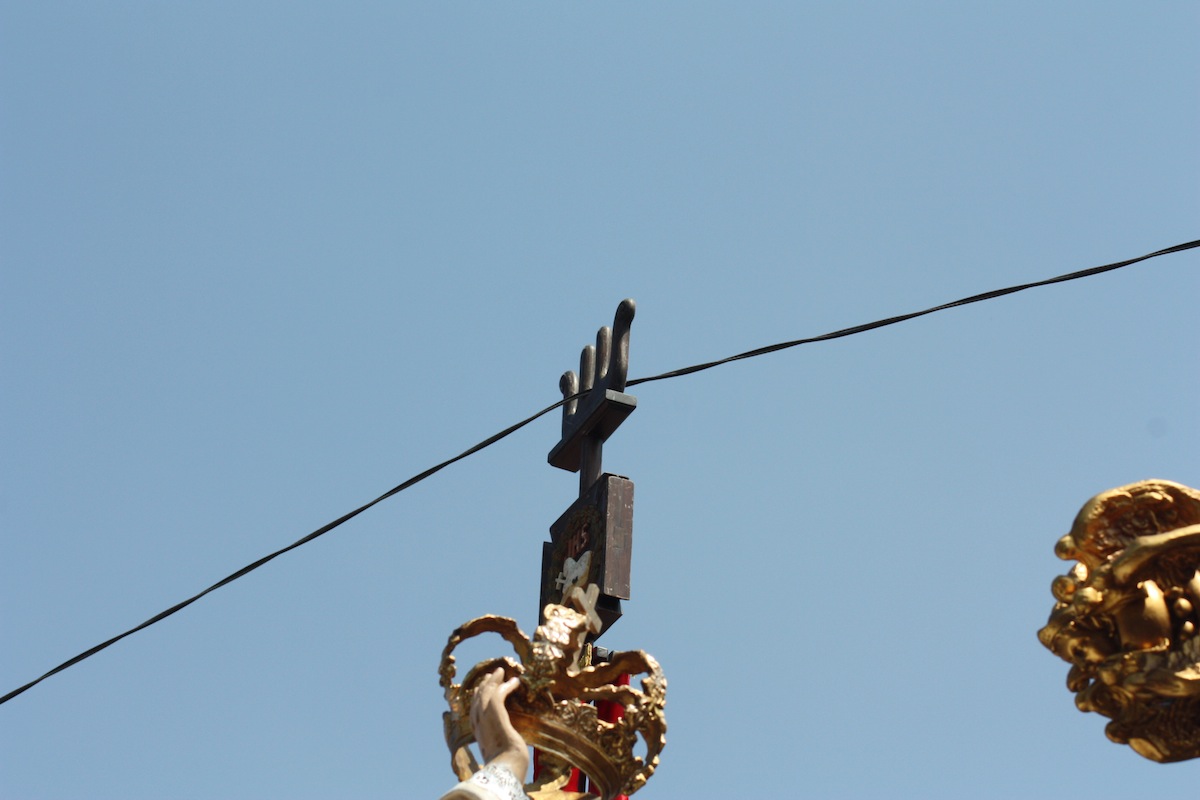
The last procession we saw included Roman soldiers.  Now, the soldiers were not just there for decoration….they served a purpose, using their pitch forks to prop up the telephone and power lines.  There was also a fleet of men with walkie talkies at vantage points throughout the procession organizing the mass of people.